
What Is Lazy Eye? Causes, Symptoms & Treatment
23 Nov 2026


doctor-image-202507185103425.webp)
Writer
Dr.Jirach Jatechayanon (MD,MSc)
History
- Bachelor of Medicine, Faculty of Medicine, Rangsit University
- Board Certification in Ophthalmology, Faculty of Medicine, Khon Kaen University
- Certificate of Advanced training in double eyelid surgery under the guidance of a Dr. Cheangariyavong, Facial Plastic and Reconstructive Surgeon
- Certificate of Advanced training in double eyelid surgery through the International Fellowship in Advanced Aesthetic Science program (IFAAS), South Korea
What Is Lazy Eye (Amblyopia)? Main Lazy Eye Causes
Key Takeaways:
Understanding what is lazy eye begins with realizing it is not a behavioral issue, but rather a disconnect between the eyes and the brain where the brain actively ignores visual input from the blurry eye. Since most children are unaware of this condition, parents must closely watch for signs like squinting, head tilting, poor depth perception, or uncoordinated eye movements. Common lazy eye causes typically include strabismus (crossed eyes), unequal refractive errors, or visual deprivation conditions such as ptosis (drooping eyelids). Therefore, taking your child for an early vision screening and initiating lazy eye treatment before the age of 7 to 8 (the golden window for visual development) is a crucial step that should never be overlooked.
When hearing the term "lazy eye," many people mistakenly assume it relates to a child's lazy behavior or a reluctance to use their vision. From a medical standpoint, however, understanding what is lazy eye reveals it as a silent condition caused by an abnormal connection between the eyes and the brain. If left untreated beyond the golden window of visual development before the age of 7 to 8, this condition can have a severe and long-term impact on a child's visual clarity.
Understanding Amblyopia (Lazy Eye)
Amblyopia, commonly known as lazy eye, is a condition where vision in one or sometimes both eyes decreases or fails to develop fully during childhood, even though the external structure of the eye appears completely normal.
Naturally, the eyes function by receiving light and transmitting images to the brain for processing. However, when certain underlying issues cause one eye to consistently send blurred or unclear images, the brain becomes confused. It resolves this problem by actively ignoring or suppressing the visual input from the affected eye, choosing to rely solely on the clearer eye. When this blurry eye remains unused for an extended period, the part of the brain responsible for its vision eventually stops developing.
Warning Signs: What Are the Symptoms of Lazy Eye?
The most concerning aspect of this condition is that most children are completely unaware of it and rarely complain about blurry vision. This happens because the brain has already adapted by using the stronger eye to compensate for the visual deficit. Therefore, close observation of behavioral changes by parents is an essential key to early detection. Early signs to watch out for include:
- Abnormal vision: Frequently squinting, narrowing their eyes, or blinking excessively when trying to focus on distant objects.
- Postural changes: A tendency to tilt their head or turn their face to one side while watching TV, reading a book, or looking at the board.
- Poor depth perception: A loss of 3D vision makes it difficult to judge depth, causing them to frequently bump into things, miss objects when reaching for them, or struggle with walking up and down stairs.
- Physical symptoms: Regular complaints of headaches, eye pain, or eye fatigue after periods of intense visual focus.
- Strabismus: A noticeable lack of teamwork between the two eyes, or the presence of strabismus (crossed or wandering eyes).
Delving Into the Main Lazy Eye Causes
For those wondering how this condition occurs, the main reasons why light cannot focus correctly on the retina can be divided into three main categories:
1. Strabismus (Crossed or Wandering Eyes)
This occurs when the two eyes are misaligned and look in different directions. While one eye looks straight ahead, the other may turn inward or outward, causing the brain to receive two completely different images. To avoid double vision, the brain simply selects the image from the straight-looking eye and completely suppresses the input from the misaligned one.
2. Refractive Errors (Unequal Vision)
If a child has a significant difference in nearsightedness, farsightedness, or astigmatism between their two eyes, the brain will process the image from the clearer eye and ignore the image from the eye with the higher refractive error. Furthermore, if both eyes have severe refractive errors that remain uncorrected by glasses, it can eventually lead to lazy eye in both eyes.
3. Visual Deprivation
Although less common, this is considered the most severe category. It happens when a physical obstruction completely prevents light from entering the eye and stimulating the retina. Common examples include congenital cataracts, bleeding within the eye, or severe ptosis (drooping eyelids).

The Dangers of Ptosis: A Catalyst for Lazy Eye
In cases of visual deprivation, which is one of the most severe lazy eye causes, if a child or patient has noticeable ptosis where the upper eyelid sags and covers the pupil, light and images are entirely blocked from entering and stimulating the photoreceptor cells in the eye. If left untreated, the affected eye will rapidly deteriorate into a lazy eye.
Consulting an ophthalmologist to plan a physical correction is therefore an urgent necessity. Considering ptosis repair or eyelid muscle surgery will help widen the eyelid opening, reducing the obstruction to allow light to enter the eye normally. This structural correction is a crucial first step before moving forward with any brain-stimulating lazy eye treatment in the subsequent phases.
Proper Guidelines for Effective Lazy Eye Treatment
The primary goal of treating amblyopia (lazy eye) is to stimulate the brain to effectively use the weaker eye again.
1. Correcting Vision and Physical Abnormalities
Doctors will always begin by addressing the underlying root causes. This may involve prescribing custom glasses to correct refractive errors for sharper vision, performing cataract surgery, or utilizing eye muscle surgery to fix structural issues in cases of strabismus or ptosis.
2. Eye Patching
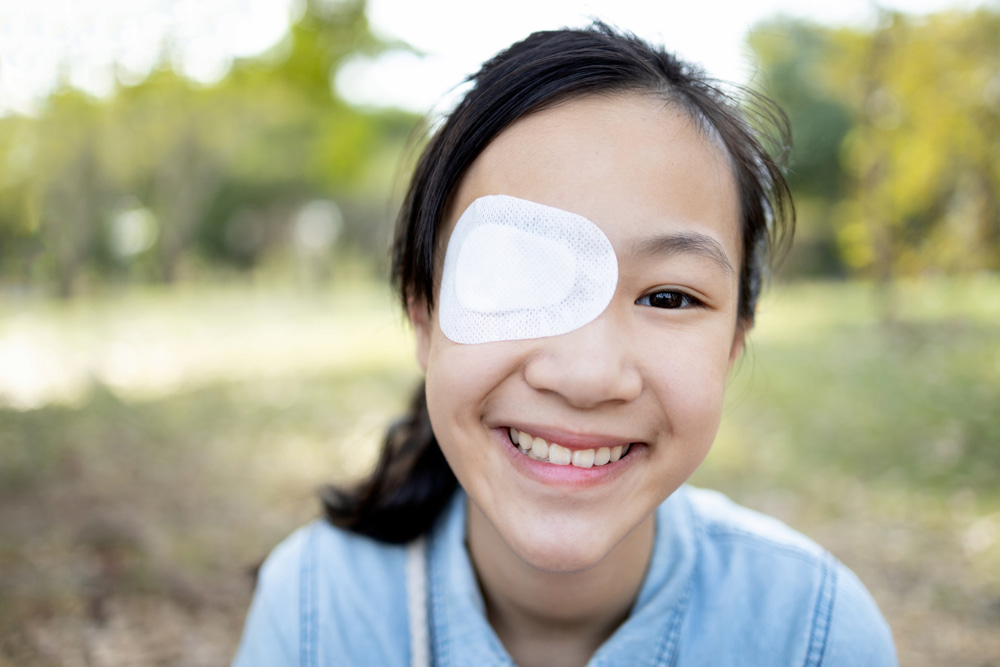
As one of the most widely used methods, an ophthalmologist will instruct the patient to wear an eye patch over the stronger, clear-seeing eye. This directly forces the brain to command and maximize the potential of the weaker eye. The required duration for daily patching will depend entirely on the doctor's professional assessment.
3. Prescription Eye Drops
For children who are uncooperative or struggle to wear a physical eye patch, this is a highly effective alternative. The doctor will apply Atropine eye drops into the stronger eye, which temporarily dilates the pupil and blurs their near vision. This method naturally forces the child to rely on the lazy eye to see.
4. Vision Therapy Technology
Today, modern technology is increasingly incorporated to help restore vision. By using VR headsets or smart glasses, patients can watch specialized videos or play custom-designed games. The software actively adjusts the visual output so that the weaker eye is forced to work harder than the stronger one, ultimately training both eyes to function seamlessly together. This innovative approach significantly reduces boredom and yields excellent cooperation from children during their treatment.
Lazy eye is a silent condition that actively hinders visual development, but it is highly manageable if parents remain attentive and recognize the symptoms early. Parents should take their children for a comprehensive vision screening with an ophthalmologist before they reach preschool age, even if there are no external signs of abnormality. Ultimately, early detection is an essential step in protecting your child's precious eyesight.
If you notice any abnormal visual behaviors in your child that indicate a risk of lazy eye, or if you have concerns regarding eyelid muscle weakness (ptosis), you can schedule a thorough screening at Bangkok Eye Aesthetics (BEA Clinic), a dedicated eyelid surgery clinic. We are fully equipped to provide professional consultations, assess visual problems, and outline a tailored vision care plan. We also determine the most appropriate approach for ptosis repair based on the unique structural needs of each patient. Every case is meticulously evaluated and cared for by Dr. Jirach Jatechayanon, a specialized oculoplastic surgeon. Book a free consultation today via our LINE Official @beaclinic or call 064-196-3635.
References
- Amblyopia (Lazy Eye). Retrieved July 15, 2026, from https://my.clevelandclinic.org/health/diseases/10707-amblyopia-lazy-eye
Frequently Asked Questions About Lazy Eye (FAQs)
Q: How does a lazy eye differ from nearsightedness or farsightedness?
A: Lazy eye is an issue where the brain actively rejects visual input from the abnormal eye, meaning that even with corrective glasses, the vision remains blurry. In contrast, nearsightedness, farsightedness, or astigmatism are structural issues of the eye itself, which can be easily corrected to achieve clear vision by wearing glasses or contact lenses.
Q: Can adults develop a lazy eye?
A: Lazy eye typically originates and develops between the ages of 0 and 8. Adults who are diagnosed with a lazy eye usually have had this condition hidden since childhood without ever receiving proper screening or treatment, allowing it to persist until their visual nervous system has stopped developing.
Q: What happens if a child's lazy eye is left untreated into adulthood?
A: If left untreated, the vision in the affected eye can become permanently blurred over the long term. It also significantly reduces the ability to judge depth and perceive 3D images. This can be dangerous when driving and poses a serious limitation for certain careers that demand a wide field of vision and precise visual acuity, such as becoming a doctor, pilot, or police officer.
Q: Can lazy eye be prevented?
A: The most effective preventive measure is early screening. Every child should have their first comprehensive eye exam between the ages of 3 and 4, or just before starting school, to detect any hidden abnormalities. If underlying causes are found, such as unequal refractive errors or eyelid muscle weakness (ptosis), they can be promptly corrected before the brain stops its visual development process.