
6 solutions for droopy eyelids and enhance facial harmony
30 Jul 2026


doctor-image-202507185103425.webp)
Writer
Dr.Jirach Jatechayanon (MD,MSc)
History
- Bachelor of Medicine, Faculty of Medicine, Rangsit University
- Board Certification in Ophthalmology, Faculty of Medicine, Khon Kaen University
- Certificate of Advanced training in double eyelid surgery under the guidance of a Dr. Cheangariyavong, Facial Plastic and Reconstructive Surgeon
- Certificate of Advanced training in double eyelid surgery through the International Fellowship in Advanced Aesthetic Science program (IFAAS), South Korea
6 solutions for droopy eyelids and enhance facial harmony
Droopy or sagging eyelids not only affect the appearance of your eyes but also make them look tired and aged.In facial analysis and physiognomy, the eyes are considered the window of one’s energy and personality.
When the eyelids begin to droop, it can influence both one’s appearance and overall aura. Understanding the causes and effective ways to correct droopy eyelids is therefore essential.Not only for aesthetic reasons but also for improving confidence and perceived fortune.
Characteristics of droopy eyelids and their impact on facial harmony
Droopy eyelids (Ptosis) refer to a condition in which the upper eyelid falls lower than normal, causing the eye opening to appear narrower and the eyes to look smaller. In more severe cases, the drooping skin can even obstruct vision.
This condition may result from a loss of skin elasticity or excessive fat accumulation around the eyelids. In some individuals, it can be caused by weakness or dysfunction of the eyelid muscles, leading to an inability to fully lift the upper eyelid.
According to the principles of facial physiognomy, the eyes are considered the “windows of the face,” reflecting one’s vitality, confidence, and inner charm. When the eyelids droop or become saggy, the eyes may appear tired, dull, or lacking in energy,creating an impression of fatigue and diminished liveliness.
This not only affects one’s overall appearance but, in traditional beliefs, is also thought to influence luck, relationships, and career advancement.
What causes drooping eyelids?
Now that we understand how droopy eyelids can affect both appearance and facial balance, the next question is what actually causes this condition?
In fact, sagging or droopy eyelids can result from a variety of factors. Understanding the underlying cause is essential for determining the most appropriate and effective treatment plan tailored to each individual.
1.Congenital Ptosis
This condition is present at birth and occurs when the levator muscle.The muscle responsible for lifting the upper eyelid fails to develop properly. As a result, some children may have droopy eyelids or be unable to open their eyes fully.
If left untreated, this condition may interfere with normal visual development and lead to amblyopia (lazy eye). Therefore, children with congenital ptosis should be evaluated by an ophthalmologist at an early age to monitor the condition and determine the most appropriate treatment for eyelid correction.
2.Age related degeneration of eyelied skin and mucles
As we age, the skin around the eyes gradually loses collagen and elastin, leading to reduced elasticity. At the same time, The levator muscle which is responsible for lifting the upper eyelid,also weakens with age. This combination of factors can result in sagging or droopy eyelids.
This condition, known as Age-Related Ptosis or Dermatochalasis, is commonly found among older adults. Sagging eyelids not only affect facial aesthetics but can also obstruct the visual field in more severe cases, particularly during activities such as reading or driving.
3.Medical conditions associated with eyelid drooping
Apart from the natural aging process, certain medical conditions can also lead to eyelid drooping or ptosis due to muscle weakness around the eyes. Common examples include:
- Myasthenia Gravis (MG):
An autoimmune neuromuscular disorder in which the body’s immune system attacks the connection between nerves and muscles. This results in weakness of the levator muscle responsible for lifting the eyelid. Patients may notice that their eyelids droop more severely after prolonged use of the eyes but improve with rest. - Muscle degeneration or Injury:
Damage to the eyelid muscles may occur following eye surgery, inflammation, or trauma around the eyes. These factors can weaken the muscles responsible for eyelid elevation and contribute to drooping over time. muscle weakness around the eyes. Common examples include:
These conditions often require evaluation by both an ophthalmologist and a neurologist to determine the underlying cause and develop an appropriate treatment plan.
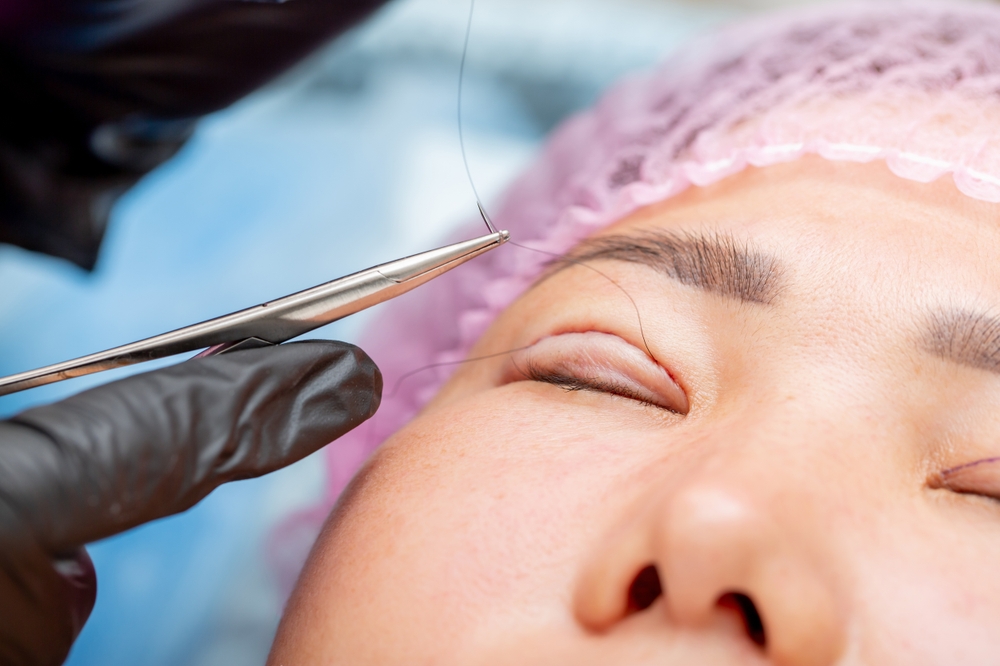
6 solutions for droopy eyelids and restore bright, confident eyes
Once the cause of drooping eyelids is understood, the next step is to choose the appropriate solution, including self-care and medical treatment, to restore brightness and confidence to your eyes.
1. Eyelid muscle exercises
Eyelid exercises help strengthen the muscles around the eyes. For example, tightly closing your eyes and then slowly opening them 10-15 times a day can help stimulate the eyelid muscles. Although this method cannot permanently correct droopy eyelids, it may help slow down the progression of sagging and improve eyelid firmness over time.
2.Gentle eye massage
Gently massaging the area around the eyes helps stimulate collagen production and relieve muscle tension. When done regularly, it can also help slow down skin sagging. However, the massage should be performed with a light touch to avoid damaging the delicate skin around the eyes.
3.Consistent eye area skincare
Regularly applying eye care products such as eye creams containing peptides, retinol, vitamin C, or hyaluronic acid can help stimulate collagen and elastin production, making the skin around the eyes firmer and more elastic.
4.Adjust daily habits
Avoid excessive eye strain, such as staring at screens for long periods. It’s important to take regular breaks to rest your eyes and ensure you get enough sleep. Adequate rest allows the eyelid muscles and surrounding skin to recover, while also reducing the risk of developing droopy eyelids over time.
5.Ptosis Surgury
This is one of the most effective treatments for droopy eyelids, especially in older adults or patients with weakened eyelid muscles. Ptosis correction surgery provides noticeable and long-lasting results, as it directly addresses the root cause of the problem.
The procedure involves adjusting or tightening the levator muscle.The muscle responsible for lifting the upper eyelid, allowing the eyelid to open fully. Before surgery, the ophthalmic surgeon will carefully assess the patient’s eyelid structure and design the incision line. During the procedure, the muscle tension is precisely adjusted to achieve the most natural and symmetrical result.
6.Double Eyelied Surgery (Upper Blepharoplasty)
For individuals experiencing droopy eyelids caused by excess skin or fat, double eyelid surgery helps remove the redundant tissue and create a new, well-defined crease. This procedure makes the eyes appear larger, brighter, and more youthful. It is particularly effective for addressing age-related eyelid sagging while also enhancing overall aesthetics and improving eye openness.
In some cases, the surgeon may recommend Subbrow Lifting or Lateral Canthopexy, a technique that lifts sagging skin around the outer corner of the eyes and beneath the eyebrows. This method naturally tightens the area without altering the patient’s original eyelid crease, making it ideal for those with significant skin laxity who wish to maintain their natural eye contour.
Precautions and postoperative care
- Mild swelling or bruising may occur within the first 2-3 days after surgery.
- Regular follow-up appointments are important to evaluate healing progress and make necessary adjustments if needed.
- Final results typically become noticeable within 6-12 months and can last for several years, depending on individual aftercare.
If you are experiencing droopy eyelids or sagging skin caused by weak eyelid muscles or other factors, you can seek treatment at Bangkok Eye Aesthetics (BEA Clinic),a specialized eye surgery clinic located in the heart of Asoke.
Our procedures, including double eyelid surgery and ptosis correction, are carefully customized for each individual. All treatments are performed by Dr. Jirach Jatechayanon, an experienced ophthalmologist specializing in oculoplastic surgery.
Book a free consultation via LINE Official: @beaclinic or call 064-196-3635 for more information.
References:
Ptosis (Droopy Eyelied). https://my.clevelandclinic.org/health/diseases/14418-ptosis-droopy-eyelid
Ptosis: causes, presentation, and management. https://pubmed.ncbi.nlm.nih.gov/12925861/
FAQ
How should I take care of myself after the surgery?

During the first 1-3 days, apply cold compresses to reduce swelling and bruising. sleep on your back with your head elevated for at least 3 days and avoid getting the wound wet during the first 7 days.
Avoid getting the incision site wet during the first 7 days, and refrain from wiping, rubbing, picking, or scratching the wound for at least 2 weeks.
Refrain from consuming fermented foods, seafood, and alcoholic beverages during the first month.
Sleep on your back with your head elevated for at least 3 consecutive days.
Take all prescribed medications exactly as directed by your surgeon to ensure optimal recovery.
How many techniques are there for double eyelid surgery at BEA Clinic?
We have 3 techniques:
✔️Short incision technique
✔️ Long incision technique
✔️ None incision technique
The ophthalmologist will assess and select the most suitable technique for each person's eye shape and problems.